
Solar Inverter Replacement Cost and Lifespan: 2026 Guide
Solar inverter replacement cost and lifespan explained: learn when your inverter will fail, what replacement costs, and how to budget ahead.

By Caleb Morgan
Learn more about Solar Panel Installation and Repair for guides, costs, and what to expect.
Compare Solar Panel Installation and Repair Pros Near You

Enter your ZIP code to compare top-rated local professionals and request free quotes.
Your solar panels might last 25 to 30 years, but the inverter that converts their DC power into usable AC electricity will not. Most homeowners are surprised to learn that the inverter is often the first major component to fail, typically somewhere between year 10 and year 15. When that day comes, you are facing a solar inverter replacement cost that can range from $1,000 to over $3,000 depending on the type of system you own. Understanding the lifespan of your inverter and what replacement entails helps you budget ahead, avoid surprise bills, and keep your solar investment performing as expected.
Why the Inverter Is the Weak Link in Your Solar System
Solar panels are remarkably durable. They have no moving parts, are sealed against the elements, and typically come with 25-year performance warranties. The inverter, by contrast, is a complex piece of power electronics packed with capacitors, circuit boards, and heat-sensitive components. It works constantly during daylight hours, converting raw DC electricity from your panels into the AC power your home actually uses. That continuous operation generates heat, and heat is the enemy of electronic longevity.
There is also a technology gap to consider. While panel efficiency has improved gradually, inverter technology has evolved rapidly. Many systems installed just a decade ago used string inverters that are now outdated. When one of those units fails, replacement options may be limited, and you might need to consider upgrading to a newer architecture. This is not necessarily bad news, since modern inverters offer better monitoring, higher efficiency, and sometimes longer warranties. But it does mean that replacement is not always a simple swap.
The type of inverter you have also plays a major role in how long it lasts and how much replacement costs. String inverters, microinverters, and hybrid inverters each have different lifespans, price points, and replacement logistics. Understanding which category your system falls into is the first step toward planning for the eventual replacement.
Typical Inverter Lifespans by Type
Not all inverters are created equal when it comes to how long they last. The three main categories, string inverters, microinverters, and hybrid inverters, have distinct lifespans based on their design, placement, and workload. Knowing the expected range for your specific type helps you anticipate when replacement might be necessary and how much you should set aside.
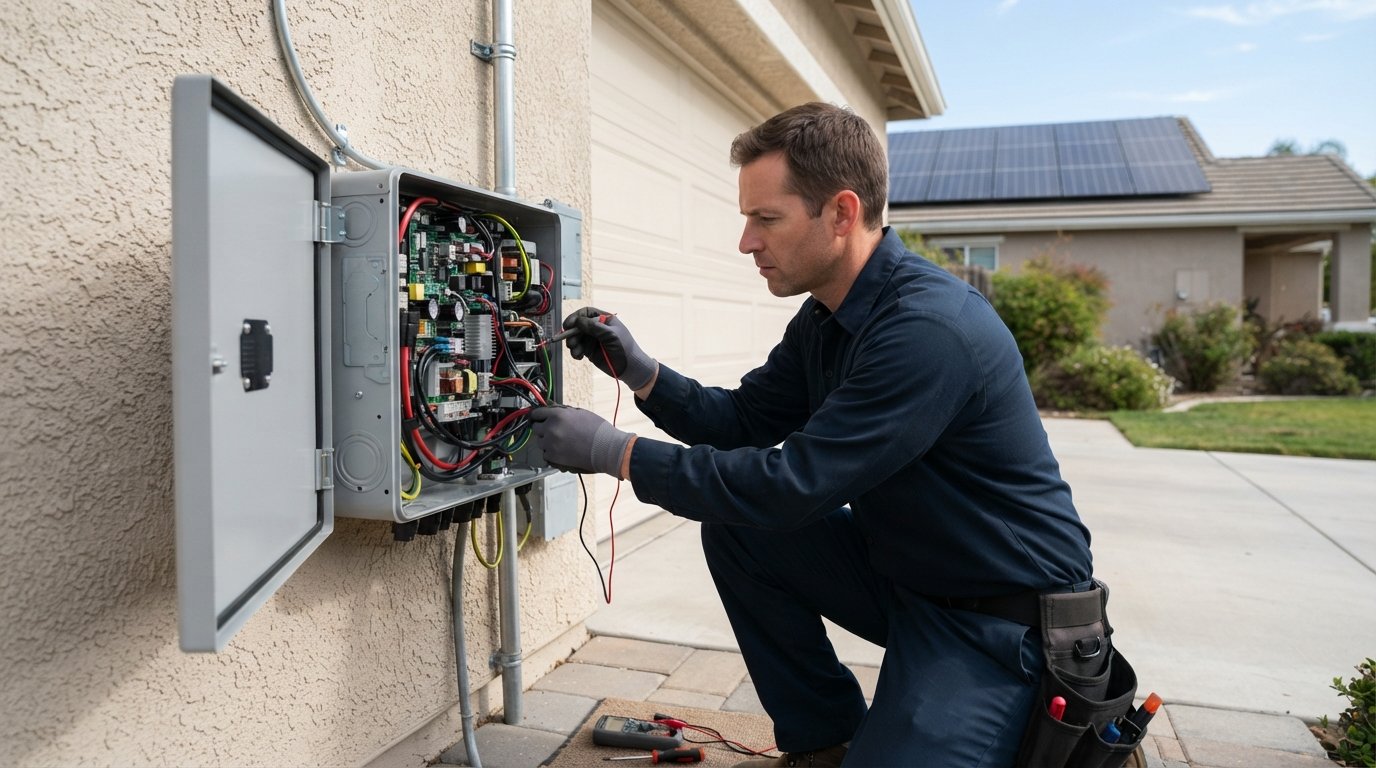
- String inverters: Typically last 10 to 15 years. These are the most common type in older residential installations. They are mounted on a wall in a garage or shaded area, which protects them from direct sun but still exposes them to ambient heat. Replacement is usually straightforward and relatively affordable.
- Microinverters: Typically last 20 to 25 years, often matching the lifespan of your solar panels. They are mounted under each panel, exposed to full sun and temperature swings. Despite the harsher environment, their distributed design means there is no single point of failure, and many come with 25-year warranties.
- Hybrid inverters: Typically last 12 to 18 years. These units combine solar inversion with battery management, making them more complex and slightly more prone to wear. They are increasingly popular as homeowners add storage, but replacement costs are higher than standard string inverters.
These ranges are averages, not guarantees. A well-ventilated string inverter in a mild climate might last 18 years, while one in a hot attic could fail in 8. Microinverters from premium brands often outlast their warranties, but budget models may fall short. The key takeaway is that you should expect at least one inverter replacement during the life of your solar panel system, and possibly two if you own a string inverter that fails early.
What Drives Solar Inverter Replacement Cost
When homeowners ask about solar inverter replacement cost, they are often quoted a single number without context. In reality, the price depends on several variables that can double or even triple the final bill. Understanding these factors helps you evaluate quotes and avoid overpaying.
The first and biggest factor is the type of inverter. A basic string inverter might cost $1,000 to $1,500 for the unit alone, while a hybrid inverter can run $2,000 to $3,500. Microinverter replacement is different: if one fails, you replace just that unit for $150 to $300, but if several fail or you want to upgrade the whole array, costs add up quickly. Labor is the second major factor. A simple wall-mounted string inverter swap might take a technician two to three hours, while replacing microinverters requires removing and reinstalling panels, which can take a full day or more.
Other cost drivers include permitting fees, which vary by jurisdiction and can add $100 to $500; extended warranties, which typically cost 10 to 15 percent of the inverter price but can provide peace of mind; and monitoring equipment, which may need to be replaced or reconfigured. If your system is older and the original manufacturer is out of business, you may also face compatibility issues that require additional labor or custom mounting.
To give you a realistic picture, here is a breakdown of typical replacement costs by inverter type, including equipment and standard labor:
- String inverter replacement: $1,200 to $2,500 total. This includes the new unit, labor, and basic permitting. Higher-end models with advanced monitoring or rapid shutdown capabilities push toward the upper end.
- Microinverter replacement (single unit): $300 to $600 total. This covers the replacement unit, labor to remove and reinstall the panel above it, and testing. If multiple units fail, the per-unit cost may drop slightly but the total rises.
- Hybrid inverter replacement: $2,500 to $4,500 total. These units are more expensive and often require additional configuration with battery systems, adding labor time.
- Full system upgrade (string to microinverters or hybrid): $4,000 to $8,000 or more. This involves replacing all inverters, possibly rewiring, and updating monitoring and rapid shutdown equipment.
These figures are national averages for 2026 and can vary significantly by region. In areas with high labor costs like California or New York, expect to pay 20 to 30 percent more. In states with lower costs of living, you might find quotes at the lower end of these ranges. Always get at least three quotes from licensed solar contractors, and ask specifically whether the price includes permitting, inspection, and warranty registration.
How to Know When Replacement Is Necessary
Inverters rarely fail without warning. They typically exhibit signs of decline for weeks or months before shutting down completely. Recognizing these signals early can help you plan and avoid the inconvenience of a sudden system outage.
One of the most common signs is a drop in energy production. If your monitoring app shows a consistent decline in daily or monthly output that cannot be explained by weather or seasonal changes, the inverter may be losing efficiency. Another red flag is frequent error messages or fault codes. Modern inverters display diagnostic codes that indicate specific problems, from overheating to ground faults. While some faults are transient, recurring errors suggest internal components are failing.
Physical symptoms also matter. If you notice unusual noises like buzzing, humming, or clicking coming from the inverter, or if the unit feels excessively hot to the touch, it may be on its way out. Some inverters have indicator lights that turn red or flash in patterns that signal a fault. Check your owner's manual to interpret these signals. Finally, if your inverter is more than 12 years old and has already required one repair, replacement is usually more cost-effective than another fix.
When you suspect your inverter is failing, the first step is to contact a licensed solar professional for a diagnostic visit. Many companies offer this for a flat fee, and some will waive it if you proceed with the replacement. During the visit, the technician will test the inverter's input and output, check for loose connections, and review error logs. If the unit is under warranty, they can help you file a claim. If not, they can provide a written quote for replacement.
It is also worth checking whether your original installer is still in business. If they are, they may offer a discounted replacement or handle the warranty claim on your behalf. If they have closed, you will need to find a new contractor. In that case, look for one who specializes in the brand of inverter you have or who has experience with your system's configuration. You can also consult our guide on solar inverter and battery explained to better understand how your equipment works together before you call a pro.
Warranties and What They Actually Cover
Most inverters come with a standard warranty of 5 to 12 years, with some premium brands offering 25 years on microinverters. However, the devil is in the details. Many warranties cover only the equipment, not the labor to remove and replace it. That means even if you get a free replacement unit, you could still pay $500 to $1,500 in labor and shipping costs.
Some manufacturers offer extended warranties that include labor, but these must usually be purchased within a certain window after installation. If you are planning a replacement, ask the contractor whether the new inverter comes with a labor-inclusive warranty. It is often worth paying a bit more upfront for a unit that includes labor coverage, especially if you plan to stay in your home for many years.
It is also important to understand the difference between a product warranty and a performance warranty. A product warranty covers defects in materials or workmanship. A performance warranty guarantees a certain level of energy production, but it is typically offered by the solar panel manufacturer, not the inverter maker. Inverter warranties rarely cover gradual degradation, only outright failure. So even if your inverter is still technically working, it may be producing 20 percent less power than it did when new, and that is not a warranty issue.
When filing a warranty claim, you will typically need proof of purchase, the serial number, and a diagnostic report from a licensed technician. Some manufacturers require that the replacement be performed by an authorized installer, so check the terms before you hire someone. If the original installer is no longer available, the manufacturer may recommend a local partner. Be prepared for a wait: supply chain issues can delay replacement units by several weeks, especially for less common brands.
Repair or Replace: Making the Right Call
When your inverter fails, you face a choice: repair it or replace it. The decision depends on the age of the unit, the cost of the repair, and the expected remaining lifespan. As a general rule, if the inverter is less than 8 years old and the repair costs less than 30 percent of a new unit, repair is worth considering. If it is older than 10 years, or if the repair cost exceeds 50 percent of replacement, go with a new inverter.
There are exceptions. If your inverter is still under a full warranty that covers labor, a repair might be free, making it the obvious choice. But if the warranty has expired and the unit is already on its second or third repair, replacement is more reliable. A new inverter will also come with a fresh warranty, improved efficiency, and better monitoring capabilities, which can add value to your system.
Another factor is technology. If you have an older string inverter and are considering adding battery storage in the future, replacing it with a hybrid inverter now could save you money later. Hybrid inverters can manage both solar and batteries, eliminating the need for a separate battery inverter. This is a smart upgrade if you plan to add storage within the next few years. However, if you have no plans for batteries, a standard string inverter is a more cost-effective choice.
For those with microinverters, the decision is usually simpler. Because each microinverter operates independently, a single failure does not bring down the whole system. You can often delay replacement for a few months, especially if the failed unit is in a hard-to-reach location. But if multiple microinverters fail around the same time, it may signal a systemic issue, such as a wiring problem or a bad batch of units. In that case, replacing all of them at once may be more economical than paying for repeated service calls.
Planning Ahead: Budgeting for Replacement
The best way to handle inverter replacement is to plan for it before it happens. If you know your string inverter has a 12-year lifespan, start setting aside money in year eight or nine. A simple savings plan of $50 to $100 per month can cover the cost of a replacement without dipping into emergency funds. If you have microinverters with 25-year warranties, you may never need to replace them, but it is still wise to keep a small reserve for labor costs if a unit fails.
Another option is to purchase an extended warranty when you first install your system. Many solar companies offer 10-year or 15-year extended warranties that cover both parts and labor. While the upfront cost can be $500 to $1,000, it can save you thousands if your inverter fails early. Just be sure to read the fine print: some warranties prorate coverage or exclude certain components.
If you are already facing a replacement and need help finding a reputable installer, consider using a service like SolarEnergy.ai to compare local solar professionals. They can connect you with vetted contractors who specialize in inverter replacements and can provide multiple quotes. This is especially helpful if your original installer is no longer in business or if you want to upgrade to a different inverter type.
Finally, keep in mind that inverter replacement is an opportunity to improve your system. Newer inverters are more efficient, offer better monitoring, and may include features like rapid shutdown for enhanced safety. If you are replacing a string inverter, you might also consider upgrading to microinverters or a hybrid inverter, depending on your future plans. While the upfront cost is higher, the long-term benefits can outweigh the initial expense.
Solar inverter replacement is an inevitable part of owning a solar system, but it does not have to be a financial shock. By understanding the typical lifespan of your inverter, knowing the factors that drive cost, and planning ahead, you can manage the expense with confidence. Whether you are facing a sudden failure or simply preparing for the future, the key is to act early, get multiple quotes, and choose a replacement that fits your budget and energy goals. With the right approach, you can keep your solar investment producing clean, affordable power for decades to come.